Dormers Long Island: Types, Permits, Costs & How to Get It Right
Long Island has one of the highest concentrations of Cape Cods, ranches, and split-levels in the country — and dormers are the single most effective way to add living space without touching the footprint. Here is everything you need to know before you start.
What Is a Dormer?
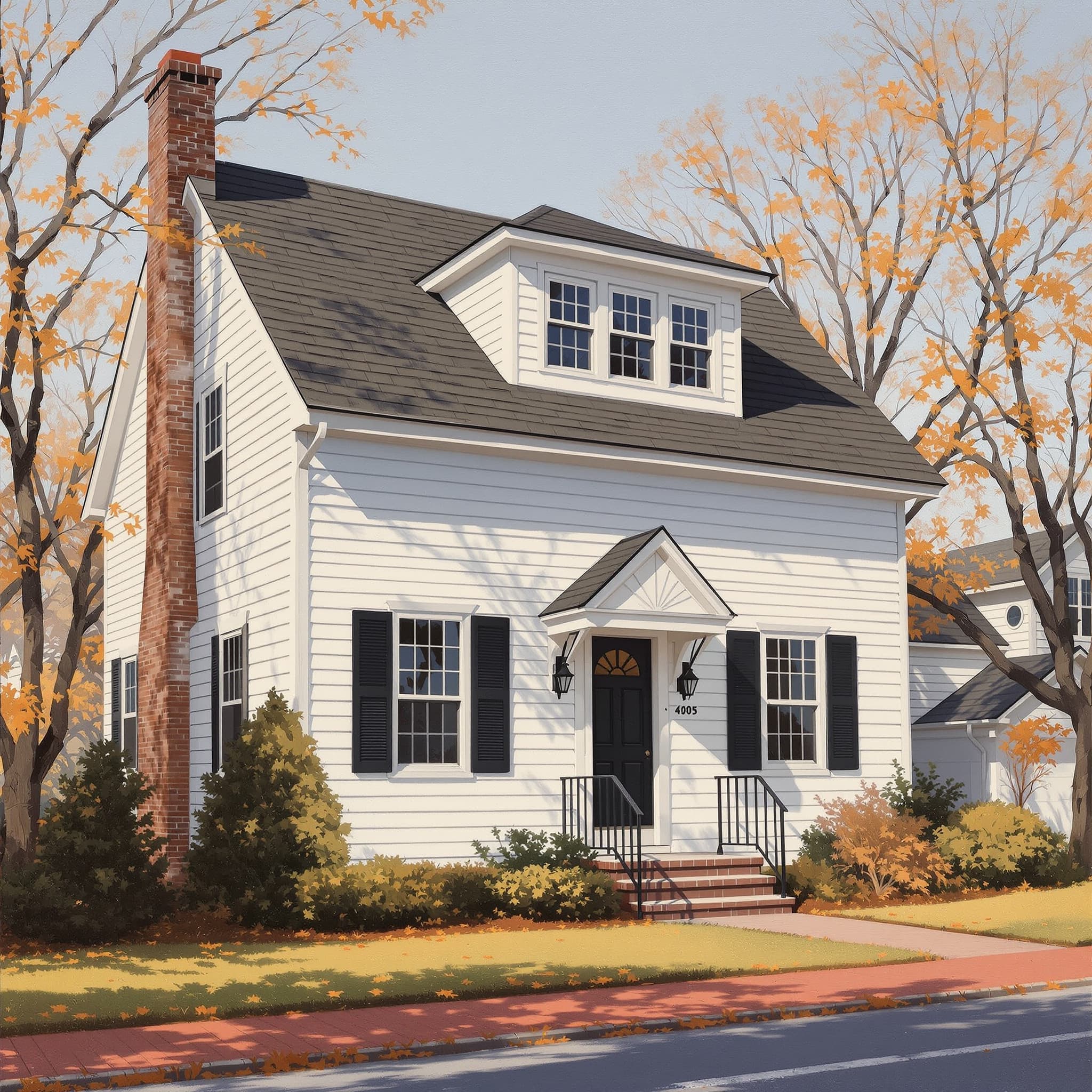
A dormer is a structural projection built out of a sloped roof, creating vertical wall space and adding headroom, windows, and usable square footage to what would otherwise be a cramped attic. On Long Island, dormers are used almost exclusively to convert the half-story above a Cape Cod or colonial into finished living space — bedrooms, bathrooms, home offices, and primary suites.
Our page on dormers on Long Island covers how we plan, permit and build them.
Long Island's postwar housing stock — the 1,000–1,400 sq ft Cape Cods built across Nassau County towns like Levittown, Hicksville, and Wantagh between 1945 and 1965 — was designed with an unfinished half-story that was always intended for future expansion. Dormers are how that expansion happens.
The 4 Types of Dormers Built on Long Island
1. Shed Dormer (Most Common)
A shed dormer runs the full width of the roof with a single, slightly sloped roof plane. It delivers the most usable square footage of any dormer type — typically 1,200–1,600 sq ft on a standard Long Island Cape — and is the default choice when homeowners want to maximize space. About 70% of Long Island dormer projects are shed dormers.
- Typical cost: $40,000–$75,000
- Best for: Cape Cods, 1.5-story colonials, ranches with attic space
- Adds: 2–3 bedrooms + full bath in most Long Island configurations
2. Gable Dormer
A gable dormer has a peaked roof that matches or complements the main roofline. It adds less square footage than a shed dormer but preserves the traditional character of Tudors, brick colonials, and older craftsman homes — styles common across North Shore Nassau County towns like Manhasset, Great Neck, and Garden City.
- Typical cost: $35,000–$65,000
- Best for: Tudors, colonials, homes in historic districts
- Adds: 1 bedroom or office + possibly a bath
3. Hip Dormer
A hip dormer has three sloped sides and integrates visually with hip-roofed homes — the classic four-sided sloped roof found on many Long Island colonials and raised ranches. It costs more per square foot of added space than a shed dormer but blends more naturally with certain exterior styles.
- Typical cost: $50,000–$90,000
- Best for: Hip-roofed colonials, raised ranches
4. Eyebrow Dormer
An eyebrow dormer uses a curved, arched roofline and is primarily aesthetic — found on estate homes, historic properties, and high-end custom builds on the North Shore and Hamptons. They are expensive to build and add minimal livable square footage, but they can significantly elevate curb appeal on the right property.
- Typical cost: $60,000–$120,000+
- Best for: Estate homes, historic properties
Permits for Dormers on Long Island: What Makes It Complicated
Dormers on Long Island require building permits in every township and village. What makes Long Island unique is the sheer number of permitting jurisdictions: Nassau County contains 95+ incorporated villages, each with its own building department — and some with Historic District overlays that require Architectural Review Board approval before a building permit is issued.
Suffolk County has 10 towns (Huntington, Smithtown, Babylon, Islip, Brookhaven, East Hampton, Southampton, Southold, Shelter Island, and Riverhead) with their own permitting offices and varying turnaround times. Huntington and Babylon typically process straightforward dormer permits in 4–8 weeks. East End towns add time for environmental review.
Garden City: A Special Case
Garden City has a Historic District covering about a third of the village. Any dormer project in the district requires Architectural Review Board approval — elevation drawings, material samples, and a board presentation — before the building department will issue a permit. Our in-house AIA architect has managed every Garden City ARB submission and has had every application approved.
Permit fees across most Long Island townships typically run $1,200–$4,000 for a standard dormer. We handle all permit filings in-house — you never touch a form.
Structural Challenges Unique to Dormers on Long Island
Long Island dormers run into three structural realities most inland markets don't face:
- 1.Postwar framing: Most 1950s–1960s Cape Cods used 2×4 or 2×6 ceiling joists that were never designed to carry floor loads. A dormer conversion requires a full structural engineer review — lateral load calculations, LVL beam sizing, and point-load design at the ridge and corners. Contractors who skip this create liability.
- 2.Salt air exposure: South Shore and North Shore waterfront homes in Nassau and Suffolk require marine-grade vapor barriers, stainless or hot-dipped galvanized fasteners, and flashing tape rated for coastal environments. Standard inland details rust and fail within 5–10 years within 3 miles of saltwater.
- 3.High-water-table basements: When a dormer adds significant weight to the structure, some south-shore homes (Merrick, Bellmore, Wantagh, Seaford) require foundation assessment to confirm existing footings can handle the added load. Our structural engineers include a foundation check in every PE-stamped dormer plan.
Frequently Asked Questions
What types of dormers are built on Long Island?
Long Island contractors build four primary dormer types: shed dormers (flat-sloped, full-width — the most popular because they maximize usable square footage), gable dormers (peaked — traditional look, common on Tudors and colonials), hip dormers (three-sided slope — blends with hip-roof homes), and eyebrow dormers (curved arch — usually on estate properties or historic homes). Shed dormers account for roughly 70% of Long Island dormer work.
Do I need a permit for a dormer on Long Island?
Yes. Every structural dormer addition on Long Island requires a building permit. Nassau County contains over 95 incorporated villages, each with its own building department. Suffolk County towns (Huntington, Smithtown, Babylon, Brookhaven, Islip, and others) each run their own permitting offices. Some Nassau County areas — Garden City's Historic District, for example — also require Architectural Review Board approval before a building permit is issued. Permit fees typically run $1,200–$4,000 depending on the township and scope.
How much does a dormer cost on Long Island?
A small gable dormer starts around $35,000–$65,000. A full shed dormer typically runs $40,000–$75,000. A full Cape Cod second-story conversion — the most common large dormer project on Long Island — typically runs $80,000–$150,000 all-in including engineering, permits, and interior finish. Prices vary based on structural complexity, interior scope, and permit jurisdiction.
How long does a dormer take on Long Island?
Pre-construction (design and permits): 6–12 weeks. Construction after permit approval: 6–16 weeks depending on size. Total from first consultation to CO: 3–6 months for a standard shed dormer, 4–7 months for a larger Cape conversion. The framing day is the critical milestone — an experienced crew opens the roof, frames the dormer, and has it sheathed and watertight before dark.
What is the best dormer type for a Cape Cod on Long Island?
A shed dormer is the standard choice for Long Island Cape Cods because it delivers the most usable square footage per dollar. A full-width shed dormer on a 1,000–1,400 sq ft Cape can add 1,200–1,600 sq ft of finished second-floor space — typically two or three bedrooms, a full bath, and hallway. Gable dormers are a better fit when the homeowner wants to preserve the exterior roofline character of a Tudor or brick colonial.
How LI Homeworks Handles Dormers on Long Island
LI Homeworks has been building dormers across Nassau and Suffolk County since 2009. Our in-house AIA architect our in-house architect draws every permit set — no outsourced plans, no miscommunication between designer and builder. Our permit coordinator handles every filing and has relationships with building departments in all 13 Long Island townships and dozens of incorporated villages.
On construction day, we strip the roof, frame the dormer structure, and have the opening sheathed and weatherproof before dark — eliminating weather exposure to your home's interior. Interior work (electrical, HVAC, insulation, drywall, and finish) follows on a firm written schedule.
Every dormer project includes a PE-stamped structural plan, a fixed-price written contract with no escalation clauses, and a 5-year workmanship warranty. We carry $1,000,000 general liability and full NY workers comp on every active job.
Ready to plan your Long Island dormer?
We provide free in-home consultations across all of Nassau and Suffolk County. Our architect comes to your home, assesses the existing structure, and gives you a realistic scope and budget estimate — no commitment required.